
Which fabric do you use for tufting?

Drie soorten tufting doek van dichtbij: primair doek met raster, secundair doek en grip-backing

Which fabric do you use for tufting? Let the experienced speak!

It’s almost no longer an opinion but a fact. The gray polyester primary tufting fabrics have become by far the most popular in the tufting world. Whereas the white cotton tufting cloth used to be number one, the renewed polyester version is by far the highest rated among all tufting cloths. Experienced rug tufters use this polyester tufting textile to create their most beautiful artworks. 


Premium tufting cloth: The Perfect Canvas for Tufting

  • Premium cloth is a versatile fabric, perfect for tufting adventures.
  • Made of 100% polyester 
  • The premium fabric is often preferred for its durability and ease of use. 
  • Polyester is flexible and resilient, making it ideal for tufting with dense yarn or intricate designs.
  • Stretching is much easier thanks to the fabric’s flexibility.

How to Stretch the Fabric?

  • Trust your instinct for the right tension.
  • Start by securing the top of the fabric to the frame.
  • Pull the bottom down for gradual tensioning.
  • Aim for a firm, drum-like resistance when tapping with your fingers.

The Difference Between Primary and Secondary Fabric

  • Primary tufting fabric is the canvas where your tufting masterpieces come to life. You stretch this fabric over the frame.
  • You use the secondary tufting fabric after tufting the project on the primary cloth. You glue the yarn in place and cover it with this secondary fabric.
  • Secondary tufting fabric provides support and structure to your finished piece, depending on its purpose.


At Dutch Tufting, we love sharing our passion for tufting and helping you create beautiful masterpieces with primary tufting cloth. Check out the wide range of premium tufting fabrics in the online store and choose a size that suits you!
Read next

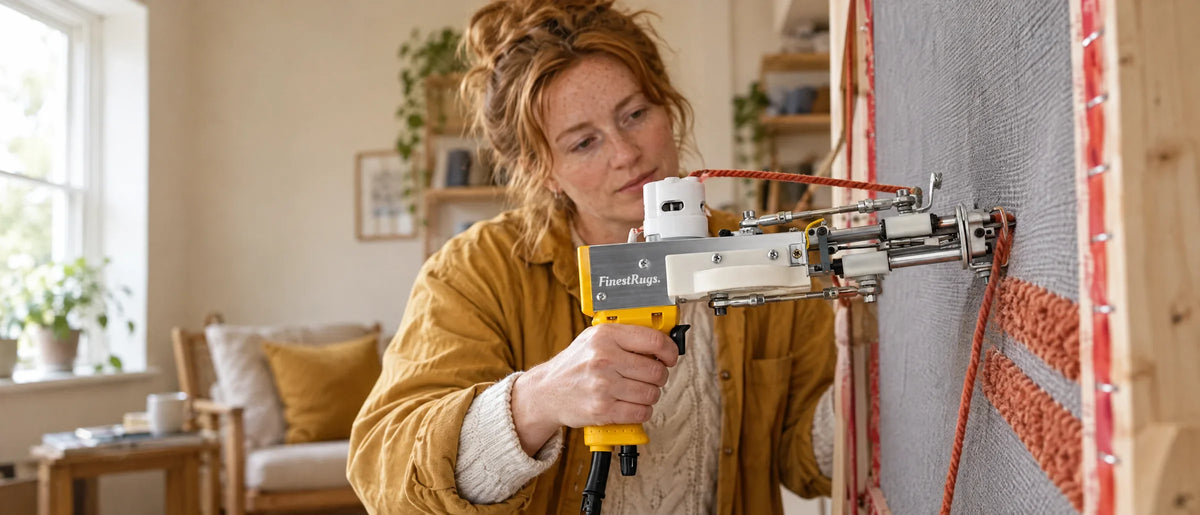
Lage zijaanzicht van de eerste steken: tufting gun gaat door het gespannen doek op een staand frame
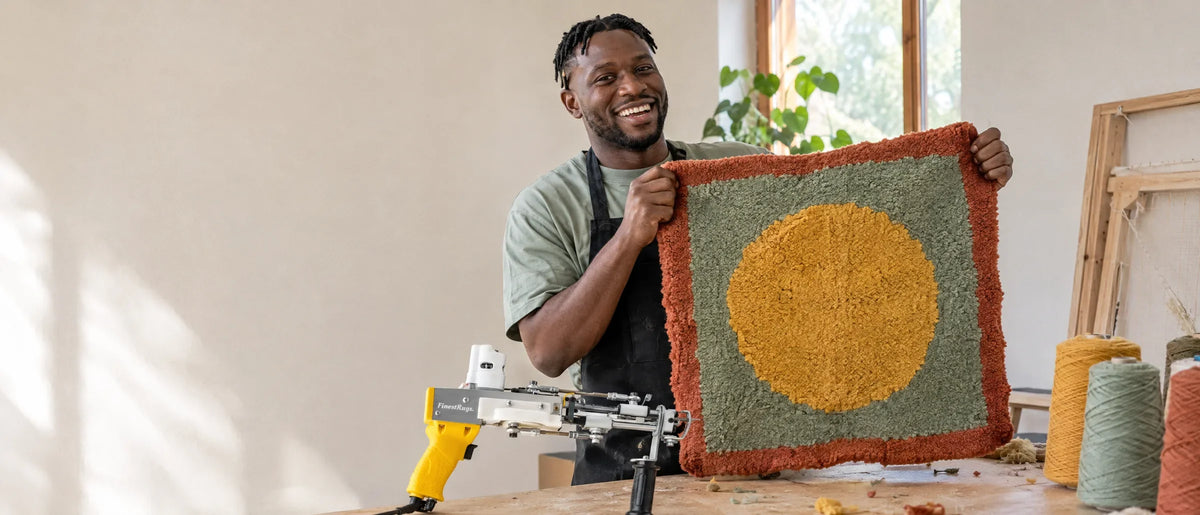
Tufter houdt lachend zijn eerste, iets scheve zelfgemaakte kleed omhoog, tufting gun op tafel

Leave a comment

This site is protected by hCaptcha and the hCaptcha Privacy Policy and Terms of Service apply.

Frequently asked questions

Questions about fabric and cloth for tufting

Which cloth you tuft into, and what goes on the back.

Which fabric do you tuft into?

You tuft into primary tufting cloth. It is specially made to hold the yarn and to be stretched tight on a frame. Our primary tufting cloth is 100% polyester, weighs 225 g/m² and has marker lines every 50 cm. You'll find all types under tufting cloth.

Why is tufting cloth made of polyester?

Polyester has some stretch and is strong. That makes it easy to stretch the cloth tight on your frame without tearing, and it holds the yarn well while you tuft. Ordinary fabric from a fabric shop can tear or let go of the yarn. Stretch the cloth on the carpet grippers of your tufting frame.

What is secondary cloth for?

At the end, you glue secondary cloth onto the back of your rug. This keeps the glued yarns in place, protects your floor from scratches and gives the underside a neat finish. Our secondary tufting cloth is 100% cotton. You attach it with latex tufting glue.

What is the difference between cotton and anti-slip secondary cloth?

The cotton secondary cloth gives your rug a neat, sturdy back. The anti-slip cloth does the same, but also provides grip, so your rug doesn't slide on wood, laminate or tiles. It leaves no residue on your floor. The anti-slip cloth measures 1.8 x 1.8 metres. You glue both on with tufting glue.

How much tufting cloth do I need?

Allow at least 15 cm extra around your design, because the edge is held in the frame. For a first rug of 60 x 60 cm, a 1 x 1 metre sheet is enough. The value pack with 3 sheets is also included in the tufting starter set; there you choose the size yourself, from 1 x 1 to 2.1 x 2.1 metres. You'll find even larger sizes under primary tufting cloth.

What are the lines in the tufting cloth for?

Our primary tufting cloth has a marker line every 50 cm, horizontally and vertically. They make it easy to measure out your design and place it straight on the cloth. Then draw the design on the cloth, or project it with a tufting projector. Also read what you need for tufting.

View all frequently asked questions